Welcome
Let's get you into nursing school.
This site has everything you need to pass the two entrance tests for the LPN program. Here's the plan and how to use it, one step at a time.
The easier of the two tests. Passing it qualifies you to apply for the nursing program.
The bigger test, and the one that matters most. Your score competes for a seat. Aim for 70% or higher.
Use the TABE / TEAS switch at the bottom of the menu to pick which test you're studying. The whole site updates to match.
-
1
Learn it
Open a subject (Reading, Math, Science, or English) from the menu and read the short lessons.
-
2
Test yourself
Take a Practice Test to see what you know. Review with Flashcards and the Match Game, perfect for 5–10 minutes on your phone.
-
3
See what's next
My Scores shows how you're doing. Every wrong answer comes with a lesson. Read it, then try the test again.
CJ is your study helper. Tap Ask CJ in the menu any time. Ask him to explain something, show an example, or quiz you. He answers in plain, simple language.
Need a word explained? The Word List defines every term. Resources has extra video lessons.
Not sure where to begin? A short practice test will show you. About 5–10 minutes.
TEAS Reading
This section is about understanding what you read. It is different from English, which covers grammar and writing rules.
45 questions in 55 minutes. Six categories to study.This section is about pacing and pattern recognition. You already know how to read, you're learning what to look for.
The 6 Reading categories
Tap a category to study it. Each one teaches a single skill the test asks about.
Universal strategy
- 1.Read the question first, then the passage. You'll know what to look for.
- 2.Skim, don't deep-read. Most questions ask about specific lines or sections.
- 3.Eliminate the obvious wrong answers first. Two of four options are usually clearly bad.
- 4.Watch for absolute words. "Always, never, only, must" are often in wrong answers.
- 5.Trust the passage, not your outside knowledge.
Video lessons


TEAS Math
38 questions in 57 minutes. The highest-ROI section in your prep. It improves more per hour studied than any other. No trig, no calculus. Arithmetic, basic algebra, conversions, geometry.
The 6 Math categories
Tap a category to study it. Each one builds on the one before, so work through them in order if math feels rusty.
Universal strategy
- 1.Read the question twice on word problems. Underline what's actually being asked.
- 2.Write down what you know on scratch paper before computing.
- 3.Estimate first. If choices are 12, 120, 1200, 12000 and you expect ~100, you've narrowed to 120 already.
- 4.Use the on-screen calculator for arithmetic, but set up the equation by hand first. (TABE Computation has no calculator, so practice mental math too.)
- 5.Plug in the answer choices when you're stuck. Often faster than solving from scratch.
- 6.Watch units. Most careless errors are mismatched units (oz vs lb, cm vs m).
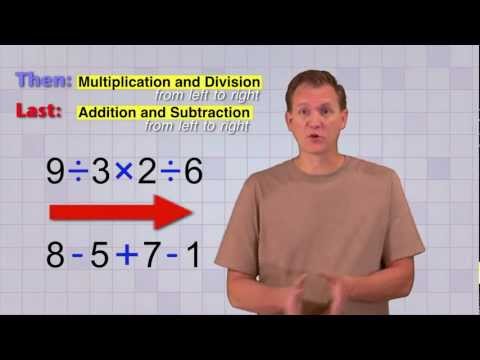
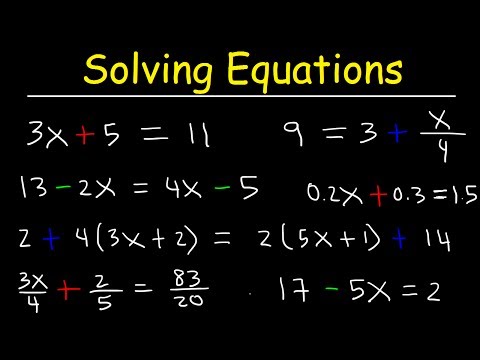
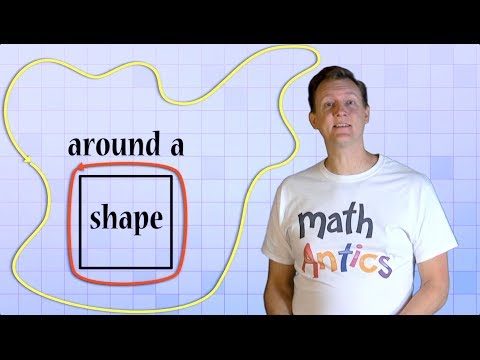
Video lessons




Science
50 questions in 60 minutes. The biggest section, and where the exam is won or lost. Anatomy & physiology alone is 18 questions, more than any other subtopic on the test.
The 6 Science categories
Tap a category to study it. Start with Anatomy & Physiology, the biggest part of the test.
Study strategy for Science
- 1.Memorize body systems first. Each system: organs, functions, key hormones/cells. Don't skip any system.
- 2.Use diagrams. Anatomy is visual. Printouts of body system diagrams on your wall beat reading text.
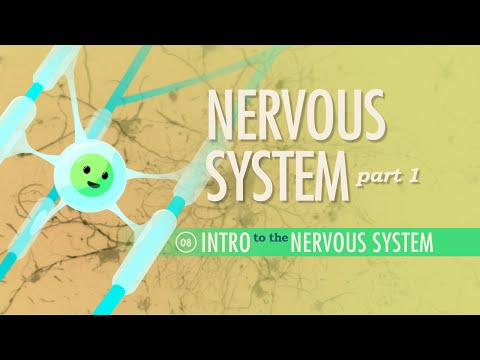
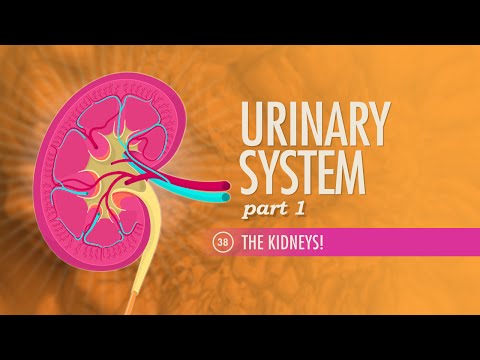
- 3.Crash Course A&P on YouTube is the gold standard. 47 short, free videos covering every system.
- 4.Flashcards for vocab: hormone names, organelle functions, prefixes (cardio, hepatic, renal, pulmonary).
- 5.For genetics, practice Punnett squares until they're automatic.





TEAS English
This section is about the rules of writing: grammar, punctuation, and spelling. It is different from Reading, which is about understanding what you read.
37 questions in 37 minutes. The smallest section but the fastest pace: exactly 1 minute per question. Rule-based: if you know the rule, you'll get the question right.
The 5 English categories
Tap a category to study it. Each one teaches a single skill the test asks about.
Speed strategy
- 1.Don't second-guess. 1 minute per question means trust your first instinct.
- 2.Read the sentence out loud in your head. Grammar errors usually sound wrong.
- 3.Eliminate obvious wrong answers. Usually 2 of 4 are bad.
- 4.Skip and return. More than 90 seconds on a question = move on.
Video lessons


Lessons for the ones you missed
Read these, then retake.
Glossary
Every formal term on the TEAS, defined. Baby steps to scholar steps. Use this anytime a word feels unfamiliar.
Reading Terms
Math Terms
Science Terms
English Terms
Cheat Sheet
Everything worth memorizing for both exams, on one page. Print it, screenshot it, or just scroll. The Math and English content covers both TABE and TEAS. Science is TEAS only.
Math
Most-tested formulas, conversions, and shortcuts.
Order of operations
PEMDAS: Parentheses → Exponents → Multiplication / Division (left to right) → Addition / Subtraction (left to right). Common trap: 6 − 4 + 2 = 4, not 0.
Fractions, decimals, percents
| Fraction | Decimal | Percent |
|---|---|---|
| 1/2 | 0.5 | 50% |
| 1/3 | 0.333… | 33.3% |
| 1/4 | 0.25 | 25% |
| 1/5 | 0.2 | 20% |
| 1/8 | 0.125 | 12.5% |
| 1/10 | 0.1 | 10% |
| 3/4 | 0.75 | 75% |
Percent of a number = (percent ÷ 100) × number. Example: 20% of 80 = 0.20 × 80 = 16.
2D shape formulas
- Rectangle: Area = l × w. Perimeter = 2(l + w).
- Square: Area = s². Perimeter = 4s.
- Triangle: Area = ½ × b × h. Perimeter = a + b + c.
- Circle: Area = π r². Circumference = 2 π r (or π d).
3D shape formulas
- Rectangular prism: Volume = l × w × h. Surface area = 2(lw + lh + wh).
- Cube: Volume = s³. Surface area = 6s².
- Cylinder: Volume = π r² h.
- Sphere: Volume = ⁴⁄₃ π r³. Surface area = 4 π r².
Algebra essentials
- Slope: m = (y₂ − y₁) ÷ (x₂ − x₁).
- Slope-intercept form: y = mx + b (m is slope, b is y-intercept).
- Pythagorean theorem: a² + b² = c² (c is the hypotenuse).
- Solving for x: do the same operation to both sides until x is alone.
Statistics
- Mean (average) = sum ÷ count.
- Median = middle value when sorted. For an even count, average the two middle values.
- Mode = most frequent value (there can be more than one or none).
- Range = largest − smallest.
Conversions to memorize
- 1 ft = 12 in
- 1 yard = 3 ft (36 in)
- 1 mile = 5,280 ft
- 1 lb = 16 oz
- 1 cup = 8 fl oz
- 1 pint = 2 cups
- 1 quart = 2 pints (4 cups)
- 1 gallon = 4 quarts (128 fl oz)
- 1 hour = 60 min
- 1 day = 24 hr
- 1 week = 7 days
- 1 year = 365 days (52 wk)
- 1 km = 1,000 m
- 1 m = 100 cm = 1,000 mm
- 1 kg = 1,000 g
- 1 L = 1,000 mL
Temperature: °C to °F = (°C × 9/5) + 32. °F to °C = (°F − 32) × 5/9.
No-calculator shortcuts (TABE)
- × 5: halve the number, then add a zero. 84 × 5 = 420.
- × 9: multiply by 10, subtract once. 7 × 9 = 70 − 7 = 63.
- × 11 (2-digit): add the digits, put the sum between them. 36 × 11 = 3_(3+6)_6 = 396.
- Percents: 10% = move decimal one place left. 50% = half. 25% = quarter. 1% = move two places left.
- Estimate first. Round numbers, calculate, then check the exact answer is close.
Science (TEAS only)
30% of the TEAS. The single biggest payoff section.
Directional terms (anatomy)
Blood flow through the heart
Body → vena cava → right atrium → tricuspid valve → right ventricle → pulmonary artery → lungs → pulmonary vein → left atrium → mitral valve → left ventricle → aorta → body.
Right side = deoxygenated (to lungs). Left side = oxygenated (to body). Pulmonary artery is the only artery that carries deoxygenated blood. Pulmonary vein is the only vein that carries oxygenated blood.
Air path (respiratory)
Nasal cavity → pharynx → larynx → trachea → bronchi → bronchioles → alveoli (gas exchange happens here).
Cell organelles
- Nucleus: holds DNA, controls the cell
- Mitochondria: makes ATP (energy)
- Ribosomes: build proteins
- Endoplasmic reticulum: transports proteins
- Golgi apparatus: packages proteins
- Lysosomes: digest cell waste
- Cell membrane: gateway, phospholipid bilayer
- Cytoplasm: gel filling the cell
Plant cells ALSO have: chloroplasts (photosynthesis), cell wall, large central vacuole. Animal cells do NOT have these.
Mitosis phases (PMAT)
- Prophase: chromosomes condense
- Metaphase: chromosomes line up in the MIDDLE (meta = middle)
- Anaphase: chromosomes separate to opposite poles
- Telophase: two nuclei form. Then cytokinesis splits the cell.
Macromolecules & their monomers
- Carbohydrates ← monosaccharides (glucose). Energy.
- Proteins ← amino acids. Structure, enzymes, antibodies.
- Lipids ← fatty acids + glycerol. Energy storage, membranes, hormones.
- Nucleic acids ← nucleotides. DNA, RNA.
pH scale
0–6 acidic (lower = stronger), 7 neutral, 8–14 basic. Each unit is a 10× change. Blood pH ~7.35-7.45. Stomach acid pH ~1-2.
Scientific method & experiments
- Steps: observe → question → hypothesis → experiment → analyze → conclude.
- Independent variable: what you CHANGE.
- Dependent variable: what you MEASURE (it depends on the independent).
- Control group: gets no treatment, used as a baseline.
- Correlation ≠ causation. Two things happening together doesn't mean one caused the other.
Genetics (Punnett basics)
Capital letter = dominant allele (B). Lowercase = recessive (b). Genotype BB or Bb = dominant trait shows. bb = recessive trait shows. A Bb × Bb cross gives 1 BB : 2 Bb : 1 bb, so 3 dominant : 1 recessive phenotype ratio.
English / Language
Rules to memorize. The exam is rule-based: know the rule, get the question.
Comma rules
- Series of 3+: red, white, and blue. (Oxford comma accepted.)
- Intro phrase: After dinner, we walked.
- Joining two independent clauses with a FANBOYS conjunction: I studied, but I failed.
- Around non-essential info: My brother, who lives in Ocala, is a nurse.
- Dates & addresses: March 15, 2025 / Eustis, Florida.
- Do NOT use a comma: to join two complete sentences without a conjunction (comma splice), or before "and" when joining two verbs only (I studied and passed — no comma).
FANBOYS: For, And, Nor, But, Or, Yet, So.
Capitalization rules
- Always capitalize: I (the pronoun), first word of a sentence, proper nouns (names, places, languages, days, months, holidays, brand names), titles before names (Dr. Smith).
- Do NOT capitalize: seasons (spring), directions (north — unless it's a region: the North), common nouns (school, doctor, university), titles after names.
- Book/movie titles: capitalize first, last, and major words. Not a/an/the/of/in unless first.
Apostrophe traps
its = belonging to it
your = belonging to you
their = belonging to them
there = location
Subject-verb agreement
- Singular subject → singular verb. The nurse is here.
- Prepositional phrases don't count: The box of books IS on the table (box, not books).
- Either/or, Neither/nor: verb agrees with the CLOSER subject.
- Collective nouns (team, family) take singular verbs in American English.
Sentence types
- Simple: one independent clause. The patient slept.
- Compound: two independent clauses joined by FANBOYS or semicolon. The patient slept, and the nurse charted.
- Complex: one independent + one dependent. After the patient slept, the nurse charted.
- Fragment: missing subject or verb. Running through the hallway. (fix it)
- Run-on / comma splice: two independent clauses without proper join. (fix with period, semicolon, or FANBOYS + comma)
Prefixes & suffixes (high-yield)
- un- / in- / dis- / non- = not. re- = again. pre- = before. post- = after.
- sub- = under. super- = above. trans- = across. anti- = against. inter- = between.
- -able / -ible = capable of. -ful / -less = full of / without. -ly = in the manner of. -tion / -sion = act or state of.
- Medical: cardi- heart, derm- skin, hepat- liver, nephr- / ren- kidney, neuro- nerve, osteo- bone, gastro- stomach, pulmo- lung, hemo- blood. -itis = inflammation, -ology = study of, -phobia = fear of.
High-trap spelling words
absence · accommodate · achieve · argument · beginning · believe · calendar · cemetery · committee · conscience · definitely · embarrass · February · foreign · government · grammar · harass · height · necessary · neighbor · occurred · possess · privilege · receive · recommend · rhythm · separate · succeed · truly · weird
Reading
Strategies and definitions you'll need.
Main idea vs. topic
Topic = what the passage is ABOUT (one or two words: "octopuses"). Main idea = the specific point the author is making about the topic ("Octopuses are surprisingly intelligent"). Main idea is often the first or last sentence of a paragraph.
Author's purpose (PIE-E)
- Persuade: convince the reader of something (editorials, ads).
- Inform: explain or teach (textbooks, instructions, news).
- Entertain: amuse (stories, jokes, novels).
- Express: share feelings (poems, memoirs, personal essays).
Inference rules
- Must be supported by the text. No outside knowledge.
- The right answer is the smallest safe step from the clues, never the most dramatic.
- For each option, ask: "Can I point to the exact words that make this true?" If no, eliminate it.
Text structures
- Chronological: time order (first, then, finally).
- Cause & effect: because, therefore, as a result.
- Compare & contrast: similar, however, both, unlike.
- Problem & solution: issue then fix.
- Descriptive: features and details listed.
Context clue types
- Definition: meaning stated right after. "The cardiologist, a heart doctor, examined her."
- Synonym: a similar word nearby. "She was elated, really happy."
- Antonym / contrast: an opposite. "Unlike his timid sister, he was bold."
- Example: examples follow. "Crustaceans, such as crabs and lobsters, live in water."
Primary vs. secondary sources
- Primary: firsthand, original. Letters, diaries, photographs, interviews, original research.
- Secondary: interprets primary sources. Textbooks, biographies, documentaries, encyclopedia articles.
Test strategy
- Read the question first, then skim the passage looking for the answer.
- Eliminate the obviously wrong answers first; two of four are usually clearly bad.
- Watch absolute words: "always, never, only, must" are often in wrong answers for inference questions.
- Trust the passage, not your gut. The answer is in the text.
Test day rules
- Arrive 30 minutes early. Bring government ID.
- An on-screen calculator is provided for the TEAS Math section. TABE has a no-calculator section AND a calculator-allowed section — know which is which.
- Never leave a question blank. There's no guessing penalty — pick something even if you're unsure.
- Pace yourself. Reading: ~1.2 min/question. Math: ~1.5. Science: ~1.2. English: ~1.0.
- If a question is hard, mark it and come back. Don't blow ten minutes on one item.
- Eat before. Hydrate. Sleep. The test rewards calm thinking, not last-minute cramming.
Resources
The free YouTube channels, apps, and websites that round out your prep. Starred items are the must-haves.
All links open in any Windows browser. Apps (Pocket Prep, Anki) have free web versions or Windows downloads.
Top free YouTube channels (great for TEAS)Top free YouTube channels (Khan Academy is the must-have for TABE)
Free TABE practice (Florida tech colleges)
Apps (TEAS-focused)Apps (mostly TEAS-focused; some work for TABE too)
Free websites (TEAS)Free websites (TEAS-focused list)
More free TEAS practice tests
- Mometrix free TEAS practice test
- Test-Guide free TEAS tests
- Union Test Prep TEAS 7 tests
- Pocket Prep (free tier with 50+ questions)
If your school (Lake Tech, Mid-Florida Tech, Orange Tech) requires the TABE before the TEAS, switch to TABE focus in the header. Practice tests, flashcards, and study material will all swap to TABE-style content. TABE-specific drills (no-calc math, spelling, capitalization) live inside the Math and English study tabs.
Progress
Log scores and notes. Everything saves to this browser.
What % to aim for
TEAS scores fall into 5 tiers. Check your target schools: many ADN programs accept 58.7%+, but competitive BSN programs want 70-80%+.
Recommended goal: aim for 80%+ on each section's Medium-tier practice tests, and 70%+ on Hard tier, before sitting for the real exam.
Topic mastery
How you are doing on each topic, based on your practice tests. Green means strong, amber means getting there, red means the topic needs more work.
Diagnostic test scores
From the NurseHub PDF. Use score sheets at PDF pages 26, 55, 81, 108.
Notes & weak areas
A scratchpad for things you keep missing. Write down specific topics (like 'cardiovascular blood flow' or 'percent word problems') here so when you come back to study, you know exactly what to focus on. Saves automatically as you type.
Test info
Lock in your actual TEAS exam details: when, where, what score you need, which school. Having a target written down keeps prep focused.
Save and restore your progress
Your scores, streak, and study history are kept only in this browser. Download a backup file to keep them safe, or to move them to another device. To switch devices: download the file here, open this site on the other device, then use Restore and pick that file.